Guides & Tips
Camera glasses put a small camera into eyewear so you can capture a first-person point of view without holding a phone or mounting a separate camera. For cyclists, runners, travelers, and everyday creators, the appeal is simple: record what you see while keeping your hands free.
Searches for camera glasses, glasses with camera, and recording glasses often lead to very different products. Some are casual smart glasses for short clips. Some are sunglasses with camera features for travel and social sharing. Others are purpose-built sports camera glasses designed for cycling, running, commuting, and outdoor training.
This guide explains what camera glasses are, how they differ from general smart glasses, where AI sports eyewear fits, and what to check before choosing a pair.

What are camera glasses?
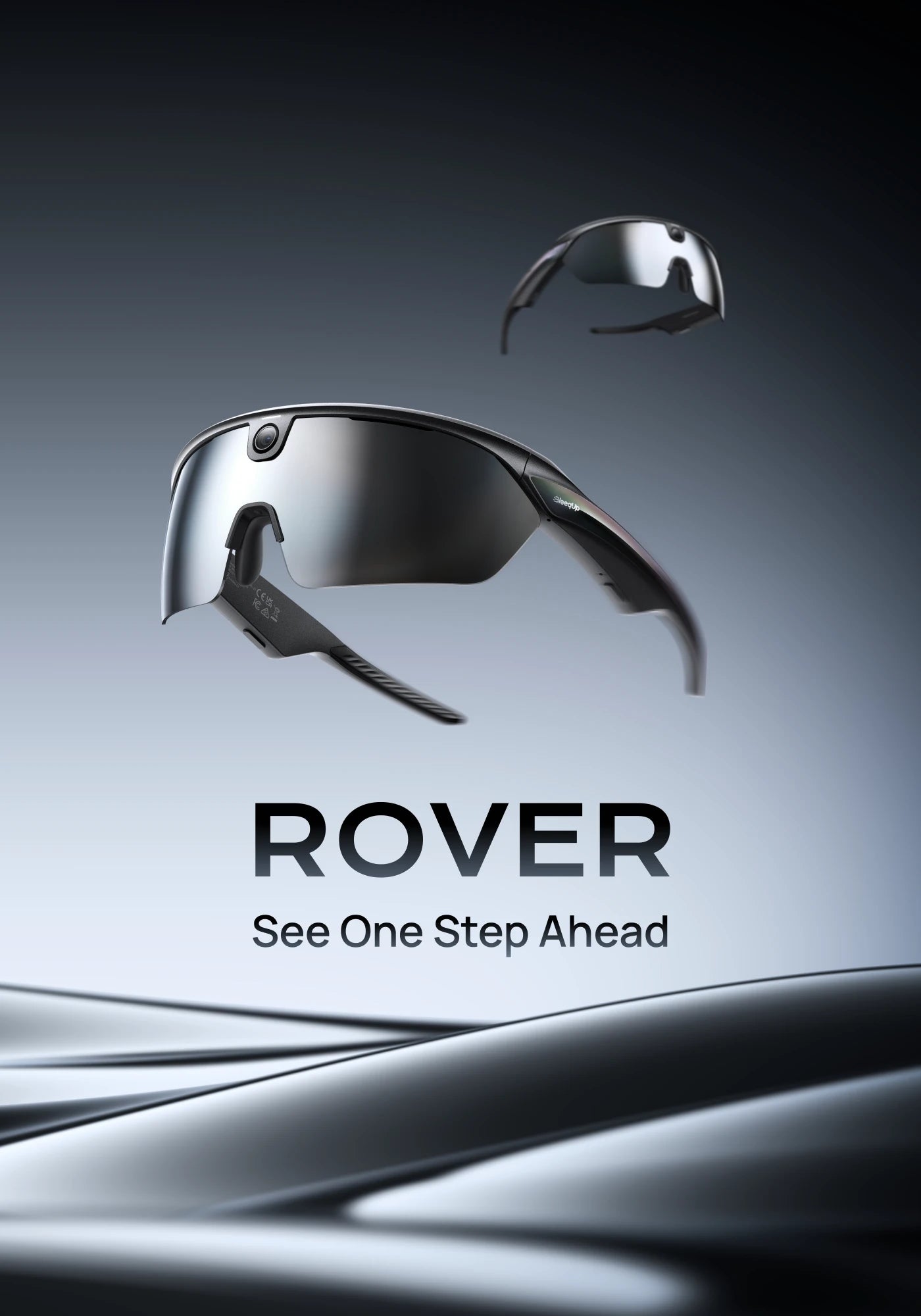
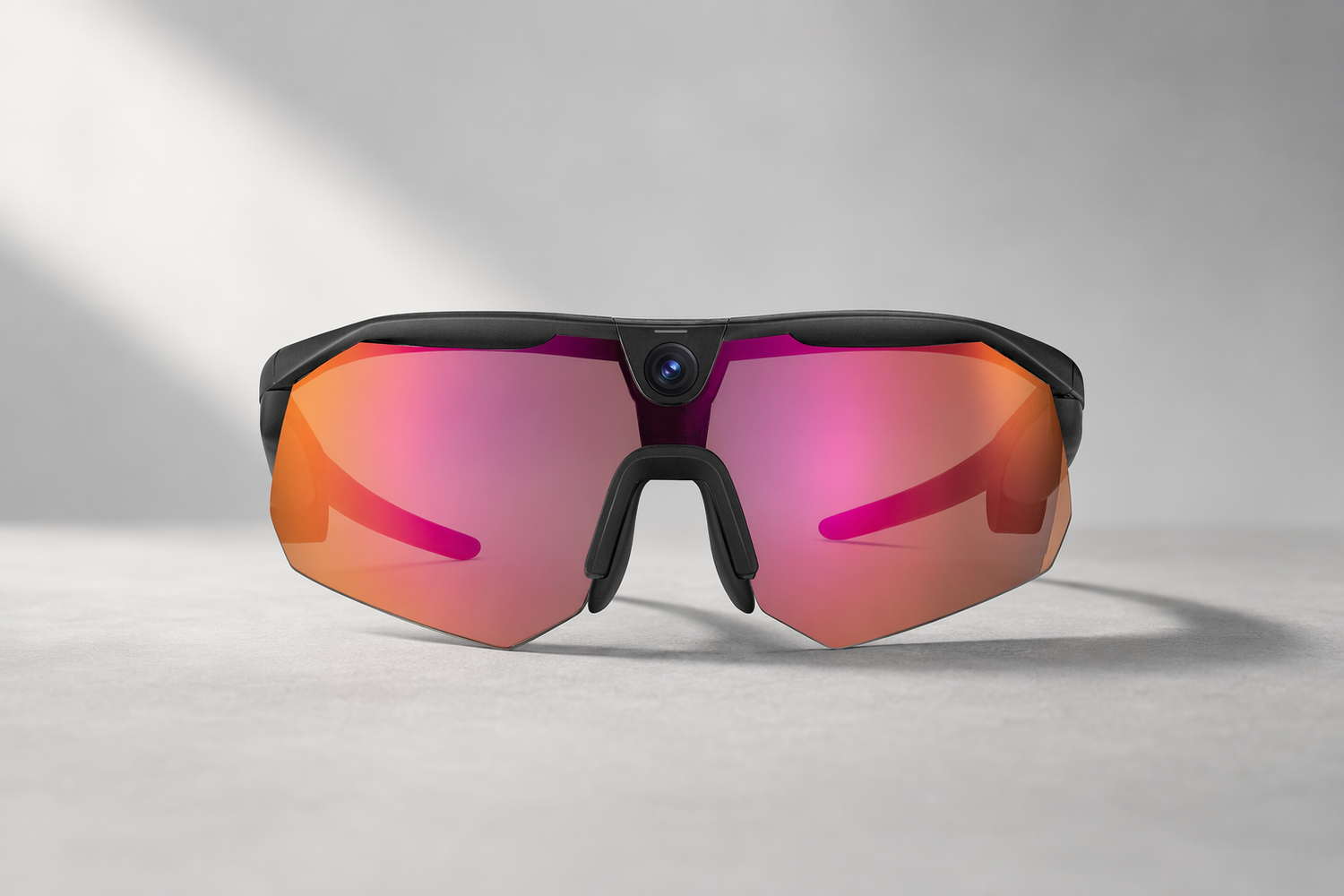
Camera glasses are eyewear with a built-in camera module, usually placed near the frame or bridge, that records photos or video from the wearer’s perspective. Instead of pulling out a phone or attaching an action camera to a helmet, chest strap, or handlebar, you start capture through a button, controller, or companion app.
The basic idea is simple, but the category is broad. A pair of glasses with camera features may be built for casual lifestyle capture, while sports-focused recording glasses usually prioritize stable fit, field of view, lens comfort, battery support, and easier operation while moving.
Camera glasses vs smart glasses
Not all smart glasses are camera glasses, and not all camera glasses are full smart glasses. Smart glasses may focus on audio, notifications, displays, AI assistants, translation, or voice control. Camera glasses focus first on image capture. Some products combine both, which is why terms like AI glasses with camera and AI sports eyewear now appear in the same searches.
| Category | Main purpose | Best fit |
|---|---|---|
| Camera glasses | Hands-free photo or video capture | Travel, daily moments, first-person clips |
| Recording glasses | Quick-start or continuous POV recording | Cycling, running, commuting, outdoor activities |
| Smart glasses | Connected features such as audio, assistants, or displays | Calls, notifications, productivity, entertainment |
| AI sports eyewear | Sports capture plus app, control, or AI-assisted workflows | Athletes who want easier capture, review, and sharing |
Why athletes use recording glasses
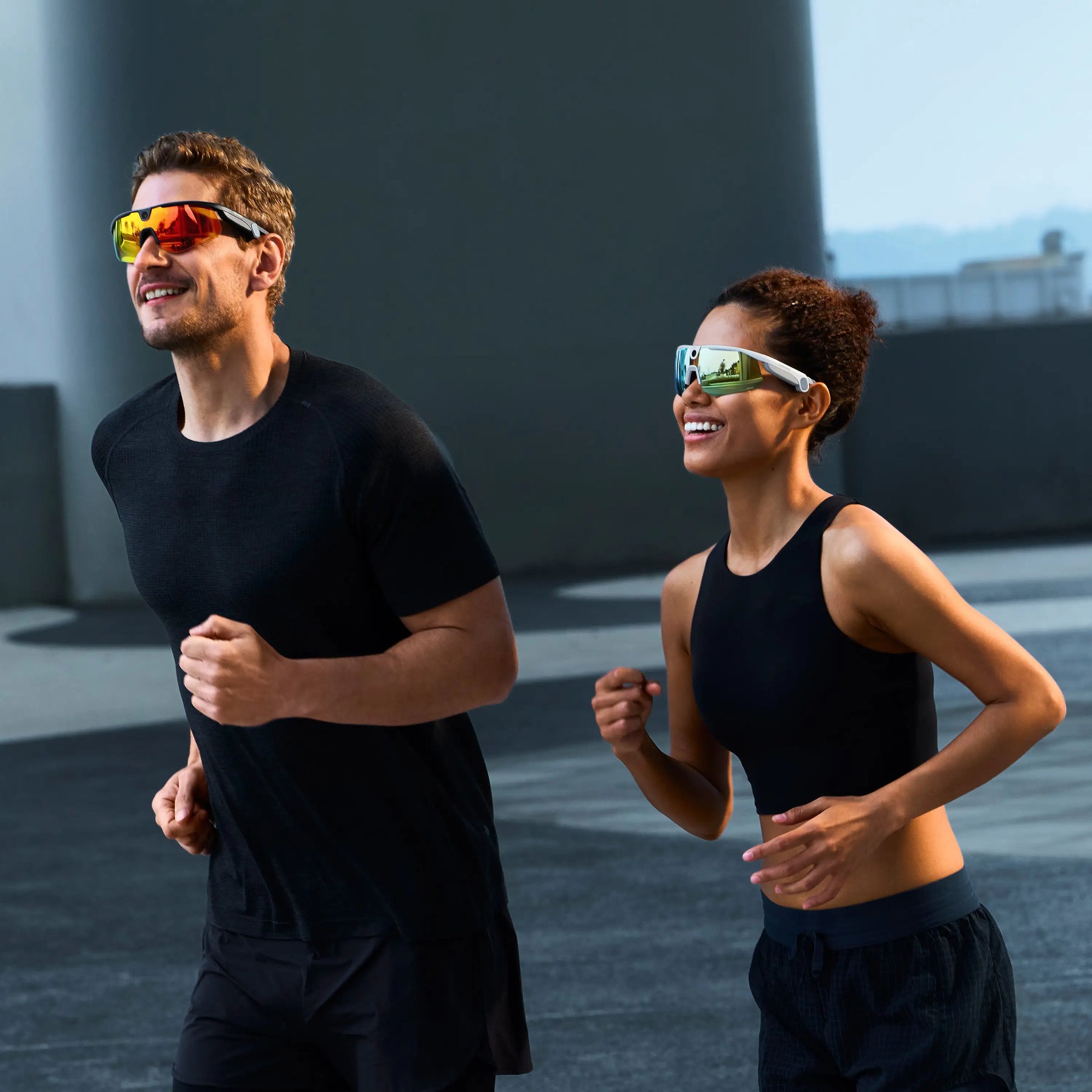
For cycling and running, camera position matters. A phone captures what you point it at. A chest mount captures from your torso. A helmet mount can feel high or bulky. Recording glasses sit close to your line of sight, so the footage can feel more natural and immediate.
That first-person view is useful for more than social clips. Riders may record scenic routes, group rides, training moments, and unexpected road situations. Runners may capture trail conditions, race-day energy, or short POV videos without changing their stride. If cycling is your main use case, our cycling camera glasses guide goes deeper into fit, road use, and ride scenarios.
What to look for before choosing camera glasses
1. Camera placement and field of view
Camera glasses should capture a view that feels close to what you actually see. A field of view that is too narrow can miss the scene. One that is too wide may distort the edges. For sports, stable forward-facing placement is often more important than headline specs alone.
2. Lens quality and eye comfort
Because these are still glasses, lens comfort matters. If you ride or run outdoors, look for lens options suited to bright light, changing weather, and long sessions. BleeqUp Ranger uses ZEISS lenses; learn more on the ZEISS lens page.
3. Controls you can use in motion
Buttons, app controls, voice controls, and optional accessories can all affect the experience. For sports, controls should be simple enough to use without breaking focus. Our app guide explains setup, review, and sharing workflows.
4. Battery life and charging workflow
Battery life depends on video settings, recording duration, temperature, and how often you review footage. Think about your real use case: a commute, weekend ride, race, or travel day may each require a different setup.
5. Privacy and local rules
Recording in public can raise privacy questions. Before using sunglasses with camera features in workplaces, events, gyms, private venues, or group settings, check local rules and be transparent when appropriate.
Where BleeqUp Ranger fits
BleeqUp Ranger is designed for people who want camera glasses that feel useful in real outdoor movement, especially cycling and running. It brings together camera capture, sports eyewear design, app support, and ZEISS lenses in one system. For a deeper hands-on perspective, read the BleeqUp Ranger review.
FAQ
What are camera glasses used for?
Camera glasses are used for hands-free photo or video capture from a first-person point of view. Common uses include cycling, running, travel, commuting, outdoor activities, and quick everyday clips.
Are recording glasses the same as smart glasses?
Not always. Recording glasses focus on camera capture. Smart glasses may include audio, assistants, displays, or connected features. Some products combine both categories.
Can sunglasses have a camera?
Yes. Sunglasses with camera features place a camera into the frame while still functioning as eyewear. For outdoor sports, lens comfort, fit, and easy controls are especially important.